

Compare Electricity Plans in New South Wales
Last Updated: May 2026
Comparing electricity plans in New South Wales can help households manage rising energy costs and identify plans better suited to their daily electricity usage. With varying tariff structures, supply charges, and regional pricing differences across NSW, reviewing your current electricity plan regularly is an important step toward reducing long-term household expenses.
Whether you live in metropolitan Sydney, regional coastal areas, inland towns, or growing suburban corridors, electricity pricing structures can vary significantly depending on your household consumption patterns and network region.
Compare NSW Electricity Plans with Compare Today
Compare Today helps households across New South Wales:
- Compare electricity usage rates
- Review supply charges and tariffs
- Understand peak and off-peak pricing
- Evaluate solar feed-in tariff options
- Identify electricity plans suited to household usage
Reviewing electricity plans regularly may help reduce annual power costs and improve long-term energy efficiency.
Why Electricity Prices Vary Across NSW
Electricity prices in New South Wales are influenced by multiple factors including household consumption levels, regional infrastructure costs, tariff structures, seasonal demand, and wholesale electricity market conditions.
Urban households with moderate electricity usage may experience different pricing outcomes compared to larger homes with high cooling or heating demand. Regional servicing costs and network maintenance requirements can also influence electricity pricing in certain parts of the state.
Because electricity plans vary across providers and tariff models, comparing rates based on actual household usage remains one of the most effective ways to evaluate potential savings opportunities.
Understanding Electricity Bill Components
Most residential electricity bills in NSW include two major cost components:
- Daily supply charges
- Electricity usage charges
Daily Supply Charges
The supply charge is a fixed daily fee applied to maintain the electricity infrastructure servicing your property. This charge applies regardless of how much electricity your household uses.
Homes with lower energy consumption should pay close attention to supply charges because fixed daily costs can significantly affect total annual electricity expenses.
Electricity Usage Rates
Usage charges are based on the amount of electricity consumed by your household and are measured in cents per kilowatt-hour (c/kWh).
Depending on your meter type and electricity plan, pricing may include:
- Single-rate tariffs
- Time-of-use tariffs
- Peak and off-peak pricing
- Controlled load tariffs
Households with high evening electricity usage should carefully compare peak pricing structures before switching plans.
Average Household Electricity Usage in NSW
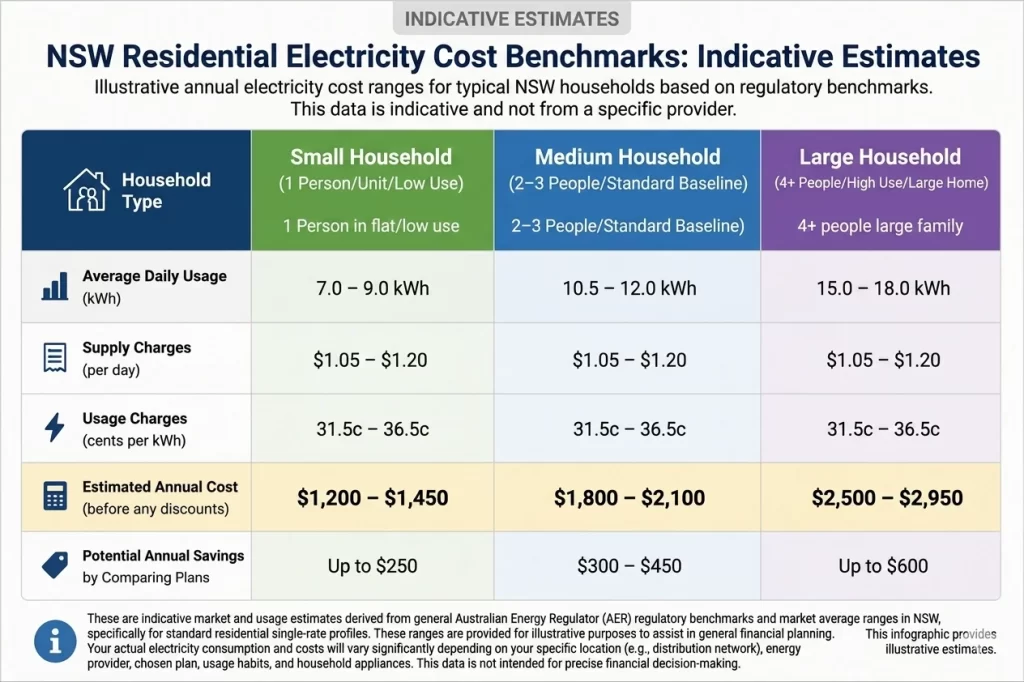
| Household Type | Average Daily Usage | Estimated Annual Electricity Cost | Main Pricing Factor |
|---|---|---|---|
| Apartment or Unit | 7 – 10 kWh per day | $1,050 – $1,320 | Supply charges |
| Standard Family Home | 14 – 18 kWh per day | $1,650 – $2,050 | Usage rates |
| Large Household | 22 – 30 kWh per day | $2,400 – $3,150 | Peak demand usage |
| Regional NSW Household | 16 – 21 kWh per day | $2,100 – $2,850 | Regional infrastructure costs |
Time-of-Use Tariffs Explained
Many NSW electricity plans now operate under time-of-use pricing structures. Under this system, electricity prices vary depending on the time of day electricity is consumed.
Typical pricing periods include:
- Peak periods with higher electricity costs
- Shoulder periods with moderate pricing
- Off-peak periods with lower usage rates
Households that can shift energy-intensive activities such as laundry, dishwashing, electric vehicle charging, or pool equipment operation into off-peak windows may reduce overall electricity expenses.
Comparing Solar Electricity Plans in NSW
Homes with rooftop solar systems should compare both usage rates and solar feed-in tariffs when reviewing electricity plans.
Some electricity plans offer higher feed-in credits for exported solar electricity but compensate with increased evening usage rates. Depending on your household usage habits, a lower base electricity rate may sometimes deliver greater annual savings than a higher feed-in tariff.
Understanding your daytime export levels and evening electricity usage patterns can help identify more balanced electricity plans.
How to Compare Electricity Plans Effectively
Review Your Electricity Usage Data
The most accurate way to compare electricity plans is by using recent electricity bills to understand your actual household consumption.
Important data points include:
- Average daily kWh usage
- Total quarterly electricity consumption
- Peak demand periods
- Solar export levels
Compare More Than Discounts
Large advertised discounts do not always result in lower electricity bills. Some plans apply discounts against higher base rates, which can still increase long-term costs.
Comparing final estimated annual costs based on your household usage is usually more reliable than focusing only on promotional discount percentages.
Review Additional Fees
Before switching electricity plans, check for:- Late payment fees
- Paper billing charges
- Credit card processing fees
- Direct debit conditions
Regional NSW Electricity Considerations
Regional NSW households may experience different electricity pricing outcomes compared to metropolitan areas due to network servicing requirements and infrastructure coverage distances.
Households in regional locations should carefully compare tariff structures, supply charges, and electricity usage patterns when evaluating electricity plans.
Frequently Asked Questions
How often should I compare electricity plans in NSW?
Electricity plans should generally be reviewed every twelve months because rates and promotional offers can change regularly.
Can I switch electricity plans without losing power?
Yes. Switching electricity plans is an administrative process and does not interrupt your electricity connection.
Do solar households need different electricity plans?
Solar households should compare both electricity usage rates and feed-in tariffs to find plans suited to their export and consumption patterns.
Compare Electricity Plans NSW Today
Electricity prices and tariff structures continue to change across New South Wales. Comparing electricity plans regularly can help households identify opportunities to reduce energy costs and improve long-term budgeting.
Whether you live in Sydney, Newcastle, Wollongong, regional NSW, or growing suburban areas, understanding your electricity usage profile is essential when evaluating electricity plans.
Disclaimer: Estimated savings and electricity costs are based on average household usage patterns across New South Wales. Actual electricity expenses may vary depending on household consumption, tariff type, network region, and solar export activity.
Note: The information provided on this page is general in nature and does not consider your individual energy requirements or financial circumstances. Review all plan documentation carefully before switching electricity plans.